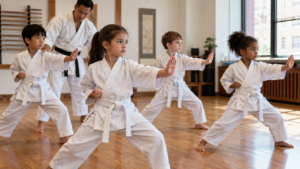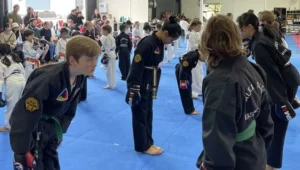

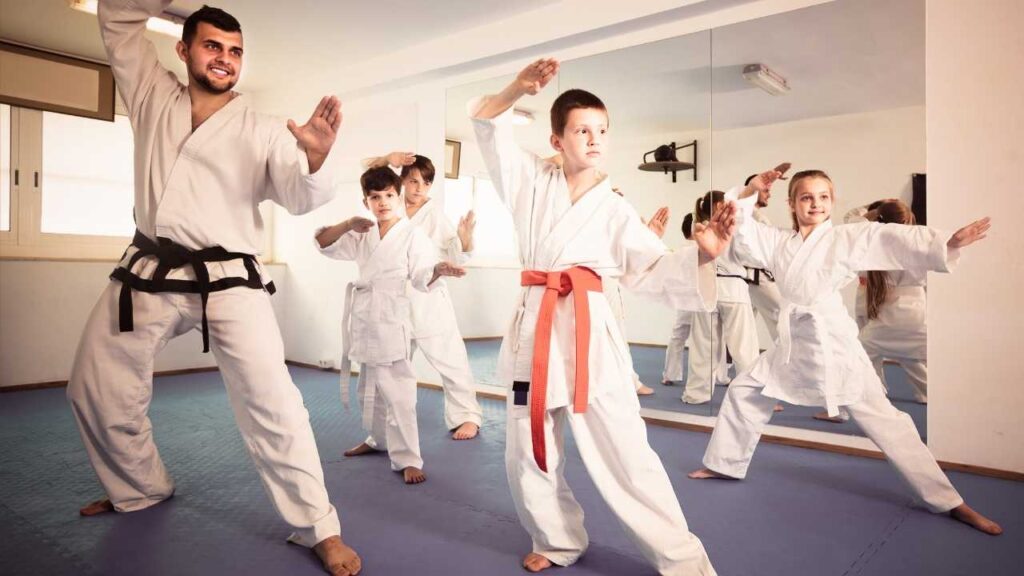
Karate can give children with special needs a structured, respectful place to build confidence, coordination, focus, and social comfort. At Harmony by Karate, we understand that every student learns differently. Our goal is to create an environment where each child can participate, improve at a comfortable pace, and feel proud of their progress.
Parents often look for karate or martial arts in the Upper West Side because they want an activity that supports physical movement while also helping their child build confidence and independence. Karate can provide that structure. It gives students clear expectations, repeated practice, and a consistent routine that helps many children feel more secure over time.
Why Structure Can Help Children Feel More Comfortable
Karate class follows a familiar rhythm. Students arrive, line up, warm up, practice techniques, work through drills, and close class together. That predictability can be especially helpful for children who benefit from routine, clear transitions, or knowing what comes next.
At Harmony by Karate, we use repetition and clear instruction to make class easier to follow. Students see demonstrations, hear directions, and have the opportunity to practice movements more than once. They do not need to understand everything immediately. They can learn through steady participation.
For many children, this structure reduces uncertainty. They begin to recognize the flow of class. They understand the expectations. They become more comfortable taking part.
How Karate Builds Confidence Through Personal Progress
Every student begins somewhere. Some children are naturally athletic. Some need more time with coordination, balance, listening, or group participation. Karate gives students a way to work toward progress without requiring them to compare themselves to everyone else.
We focus on individual development. A student may feel proud after remembering a short sequence, maintaining a stance, following a direction without assistance, or participating in a partner drill for the first time. Those moments matter.
Belts also give students visible markers of progress. Advancement comes through effort, practice, respect, and readiness. Students learn that growth can happen one step at a time.
Why Repetition Supports Learning and Motor Coordination
Karate uses repetition because physical skills improve through practice. Students repeat stances, blocks, strikes, balance work, and simple movement patterns. Over time, those movements can become more familiar and more controlled.
Repetition can also help students build body awareness. They learn where to place their feet. They learn how to stand with balance. They learn how to move with intention instead of reacting quickly or randomly.
This can be useful for children working on coordination, posture, motor planning, or confidence in movement. Each student develops at their own pace, and the goal is steady improvement rather than perfection.
How Karate Encourages Listening and Following Directions
Karate class gives students regular chances to practice listening. They learn to watch an instructor, wait for a cue, follow a sequence, and respond when it is time to begin or stop.
These are practical skills that carry into daily life. Children use them at school, at home, in sports, and during social activities. Karate creates a setting where they can practice these habits in a focused and active way.
For students who need extra time to process directions, clear demonstrations and repetition can make a meaningful difference. We work to keep instruction direct and understandable so students can stay engaged without feeling overwhelmed.
How Partner Drills Support Social Development
Karate is an individual practice, but students also train alongside others. Partner drills and group exercises can help children learn how to share space, wait their turn, respond to cues, and respect personal boundaries.
These interactions are structured. Students are not expected to figure everything out on their own. They learn through guided practice and instructor support.
Over time, children may become more comfortable working near peers, participating in class activities, and encouraging others. Many friendships begin through this shared experience of learning and improving together.
Why Inclusion Matters in the Dojo
Every child deserves an activity where they can feel included without being defined by a label. In karate, students train together with a shared purpose. They practice respect, effort, discipline, and self-control.
Some students may need instruction adjusted, repeated, or presented in a different way. That can happen quietly and respectfully. The goal is to help each student participate in a way that feels achievable while still encouraging growth.
A good karate environment allows children to be seen for their effort and character. They are students, teammates, and members of the dojo community.
How Karate Can Support Confidence Around Bullying
Karate teaches students to stand with stronger posture, speak with respect, stay aware of their surroundings, and manage their emotions when they feel challenged. These skills can support confidence in social situations.
We also teach students that strength includes self-control. Karate is not about seeking conflict. It is about knowing how to stay calm, set boundaries, and respond thoughtfully when something feels uncomfortable.
Every situation is different, and no activity can guarantee that a child will avoid bullying. Still, many parents value the confidence, self-respect, and emotional steadiness that karate can help reinforce over time.
Why Emotional Regulation Is Part of Karate Training
Children experience frustration, excitement, nervousness, disappointment, and pride during class. Karate gives them a safe setting to practice handling those feelings.
A student may struggle with a movement, lose their place in a form, or feel nervous about trying something new. We encourage them to pause, breathe, listen, and try again. Those small moments build resilience.
Students learn that they can feel challenged without giving up. They can make a mistake without feeling defeated. They can stay calm while continuing to work.
What Parents May Notice Over Time
Every child responds differently to karate. Some students become more confident in movement. Some become more comfortable participating in groups. Others may show improved focus, stronger posture, better follow-through, or a greater willingness to try new things.
Progress is often gradual. It comes through consistent attendance, patient instruction, repetition, and the growing sense that a child belongs in the dojo.
For families looking into special needs karate or martial arts in the Upper West Side, the right environment matters. Children need structure, encouragement, and instructors who understand that development does not look the same for every student.
A Supportive Place to Learn and Grow
At Harmony by Karate, we believe karate can give students more than physical skills. It can give them routine, confidence, discipline, emotional awareness, and a community where effort is respected.
If you would like to learn more about our approach or discuss whether karate may be a good fit for your child, visit our Contact page to pre-enroll or ask any questions. We welcome children, teens, and adults from the Upper West Side and throughout Manhattan.