
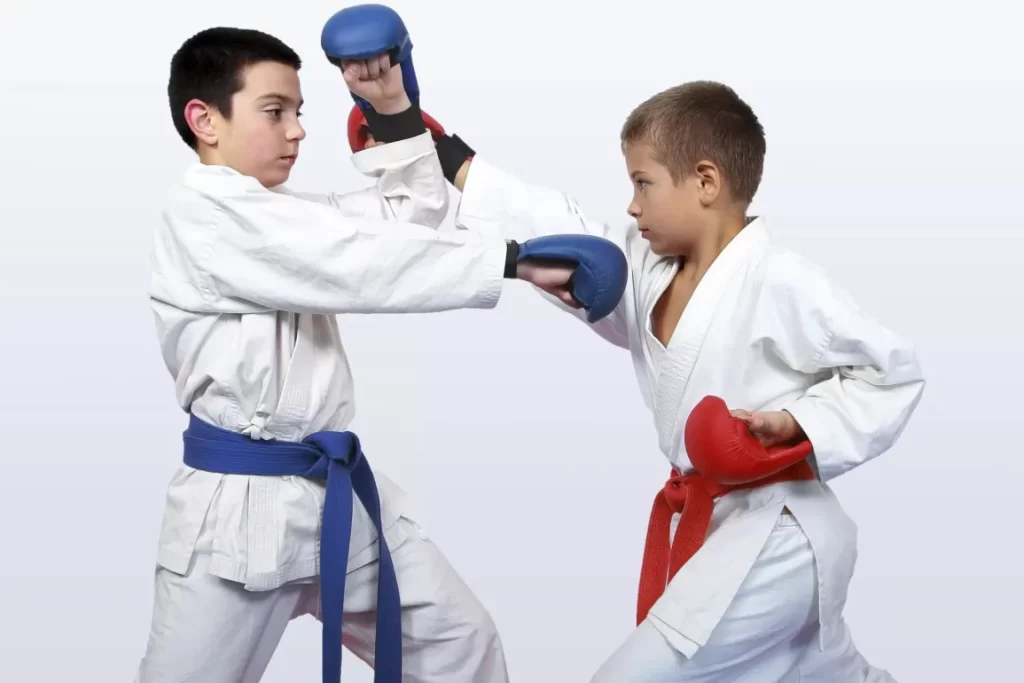
<h1>The Transformative Power of Martial Arts in Manhattan</h1>
<p>Martial arts can give children, teens, and adults a steady place to build focus, strength, confidence, and emotional control in the middle of a demanding city. At <a href=”https://harmonybykarate.com/”>Harmony by Karate</a>, we see how consistent karate training helps students feel more capable in their bodies, more present in their daily lives, and more prepared to handle challenges with composure.</p>
<p>People often begin searching for karate or martial arts in the Upper West Side because they want practical self-defense skills, better fitness, or a meaningful activity for themselves or their child. Those goals matter. Over time, many students find that karate also becomes a reliable way to manage stress, strengthen discipline, build confidence, and connect with a supportive community.</p>
<p>Manhattan moves quickly. Children balance school, homework, activities, friendships, and screens. Teens navigate academic pressure, social expectations, and growing independence. Adults manage work, family responsibilities, commuting, financial pressure, and the constant pace of city life. Karate gives students of every age a structured time each week to focus on one thing fully.</p>
<p>In class, students are asked to pay attention to their posture, breathing, balance, timing, movement, and mindset. They learn how to stay calm while facing a challenge. They learn how to recover after a mistake. They learn that steady effort can create meaningful progress.</p>
<h2>Why Martial Arts Can Feel Grounding in Manhattan</h2>
<p>Manhattan has energy, opportunity, culture, and constant activity. It can also feel overstimulating. Students spend much of their day moving from one demand to another. A child may go from school to tutoring to homework. An adult may move from work meetings to crowded transit to family obligations without much time to reset.</p>
<p>Karate offers a different kind of environment. The dojo has a clear beginning and end. Students enter with a purpose. They warm up, train, practice, listen, make adjustments, and finish class with a greater sense of focus than when they arrived.</p>
<p>That structure matters. Students do not need to solve every challenge in their lives during one class. They only need to focus on the next movement, the next instruction, the next stance, or the next breath. This can create a useful mental reset for people who spend most of their day surrounded by noise, urgency, and distraction.</p>
<p>For many Upper West Side families, karate becomes a dependable part of the week. It gives children a place where expectations are clear. It gives adults a place where they can challenge themselves physically while stepping away from the constant demands of work and daily life.</p>
<h2>How Karate Builds Focus Through Physical Movement</h2>
<p>Karate requires attention because every movement has a purpose. Students need to notice where their feet are placed, how their hips are aligned, where their hands are positioned, and how they are using balance and timing. A technique becomes more effective when the student is fully aware of what their body is doing.</p>
<p>When focus drifts, technique often changes. A stance may become unstable. A block may lose its position. A form may become difficult to remember. Students learn to notice those moments and bring their attention back to what they are practicing.</p>
<p>This process develops selective attention. Selective attention is the ability to focus on what matters while filtering out distractions. Children use this skill in the classroom. Teens use it while studying. Adults use it during work, conversations, and decision-making.</p>
<p>Karate creates repeated opportunities to practice this skill in a physical setting. Students are not simply asked to sit still and concentrate. They are moving, listening, observing, and responding. Their minds stay involved because their bodies are involved.</p>
<p>Over time, many students begin to recognize that attention is something they can practice. They learn that focus can return after distraction. They learn that a difficult day does not prevent them from showing up and giving effort. They learn how to be present even when they do not feel perfectly prepared.</p>
<h2>Why Breathing Is Part of Karate Training</h2>
<p>Breathing affects movement, posture, energy, and emotional control. Students often discover that holding their breath can create tension. Tension can make a technique feel stiff or rushed. Controlled breathing can help students stay more balanced and more aware of what they are doing.</p>
<p>At Harmony by Karate, students learn to pay attention to breathing during training. They may use it to reset after a difficult drill, prepare for a new exercise, or regain focus after making a mistake. This is a simple skill, but it has practical value.</p>
<p>Children can use breathing before a test, after a disagreement, or when they feel overwhelmed. Teens can use it before a presentation, an audition, or a difficult conversation. Adults can use it before a meeting, after a stressful commute, or during a moment of frustration.</p>
<p>Karate does not remove stress from life. Stress is part of school, work, relationships, and personal growth. Training gives students a place to practice how they respond when pressure appears. They learn that they can slow down, breathe, regain their balance, and continue.</p>
<h2>How Martial Arts Can Support Stress Relief</h2>
<p>Physical activity can be a useful way to release stress, especially for people who spend much of their day sitting, working at screens, or moving through a tightly scheduled routine. Karate gives students an active outlet that also requires concentration.</p>
<p>Students are not simply exercising without direction. They are practicing techniques, drills, forms, balance, coordination, and controlled movement. Their attention has a place to go. This can help create a break from repetitive worries or mental clutter.</p>
<p>For children, karate may offer a healthier way to release energy after a long school day. For teens, it can provide a setting where effort matters more than social pressure. For adults, it can create a protected block of time that is focused on physical training and personal development.</p>
<p>The calm that students feel after class often comes from several things working together. They have moved their bodies. They have focused their attention. They have worked through a challenge. They have completed something structured and meaningful.</p>
<p>That sense of completion can be valuable in a city where the day often feels unfinished. Emails remain unanswered. Tasks continue. Commutes happen. Family needs continue. Karate gives students a clear moment of effort, focus, and progress.</p>
<h2>Why Karate Builds Confidence Through Practice</h2>
<p>Confidence develops through experience. Students gain confidence when they practice a skill that once felt difficult and begin to feel more capable. They may remember a form they struggled with. They may improve their balance. They may work successfully with a partner. They may stay calm during a drill that used to make them nervous.</p>
<p>At Harmony by Karate, we see confidence grow through small moments. A young child may stand in front of the class with stronger posture. A teen may become more comfortable asking questions. An adult may discover that they can learn a new skill after years away from organized physical activity.</p>
<p>These moments matter because they are earned. Students build confidence through practice, feedback, correction, and persistence. They learn that progress does not require perfection. It requires a willingness to keep working.</p>
<p>This type of confidence often carries into daily life. Children may become more willing to try a new activity or speak up in class. Teens may feel more secure navigating new social situations. Adults may feel more prepared to face a difficult work conversation, a personal challenge, or an unfamiliar environment.</p>
<p>Karate helps students see themselves as people who can learn, adjust, and improve. That identity can become a powerful source of long-term confidence.</p>
<h2>How Karate Teaches Self-Defense With Control</h2>
<p>Self-defense is one reason many people explore martial arts in Manhattan. Parents want their children to have greater awareness and stronger personal boundaries. Adults want to feel more prepared as they move through the city. These are understandable concerns.</p>
<p>Karate teaches students to become more aware of their surroundings, posture, distance, and decision-making. Students learn that awareness can help them avoid many difficult situations before physical action becomes necessary.</p>
<p>We also teach that self-defense requires judgment. Students learn to stay calm, respect boundaries, and avoid unnecessary conflict. They learn that control matters. They learn that physical skill comes with responsibility.</p>
<p>For children, this can include learning how to stand with confidence, use a clear voice, recognize uncomfortable situations, and seek help from trusted adults. For adults, it can include greater awareness of space, timing, and personal boundaries.</p>
<p>Karate training can support peace of mind because students know they are developing practical skills. It also reinforces that true strength includes restraint, emotional control, and thoughtful decision-making.</p>
<h2>Why Discipline Matters Beyond the Dojo</h2>
<p>Discipline is built through repeated effort. Karate gives students a clear example of how consistent practice creates improvement. They work on the same stance, block, strike, form, or movement pattern many times. Each repetition gives them a chance to refine their technique.</p>
<p>Students learn that progress is gradual. A skill may feel awkward at first. With practice, it becomes more familiar. With more practice, it becomes more controlled. Students begin to see how patience and consistency can create real change.</p>
<p>This lesson has value outside karate. Children can apply it to reading, homework, music, sports, and friendships. Teens can apply it to school goals, college preparation, athletics, creative work, and personal responsibility. Adults can apply it to career development, health, relationships, and long-term goals.</p>
<p>Karate helps students understand that effort has value even when results are not immediate. They learn how to work toward something over time. They learn how to stay engaged when a challenge feels frustrating. They learn how to keep improving without needing constant rewards.</p>
<h2>How Belt Progress Teaches Long-Term Goal Setting</h2>
<p>The belt system gives students a visible way to recognize growth. Students work toward new levels through practice, effort, understanding, and readiness. Advancement reflects more than a single good class. It reflects development over time.</p>
<p>This teaches delayed gratification. Students learn that progress can take patience. They learn that they may need to practice the same skill many times before it feels natural. They learn that growth often happens in small steps that become more visible after weeks or months of consistent effort.</p>
<p>For children, this can create a useful model for school and other activities. They learn that a big goal can be broken into smaller pieces. For teens, it can reinforce the value of working steadily toward a long-term objective. For adults, it can be a reminder that meaningful growth remains possible at every age.</p>
<p>Belts are meaningful because students can see how far they have come. The deeper value comes from the habits they build along the way. They learn to show up, practice carefully, accept feedback, and continue working when something feels challenging.</p>
<h2>Why Karate Helps Students Respond Instead of React</h2>
<p>Karate teaches students to pause before acting. This matters during partner drills, forms practice, sparring exercises, and everyday life. A student who reacts without thinking may lose balance, miss a cue, or use the wrong timing. A student who pays attention can make a more thoughtful choice.</p>
<p>In partner work, students learn to observe distance, movement, speed, and timing. They learn to wait for an appropriate moment. They learn to respond with control rather than rushing forward.</p>
<p>This builds self-control. Self-control helps children wait their turn, follow instructions, and manage frustration. It helps teens navigate social pressure and emotional intensity. It helps adults pause before responding during stressful conversations or difficult decisions.</p>
<p>Students also learn that calmness can be active. Being calm does not mean doing nothing. It means staying aware enough to make a useful choice. Karate gives students repeated practice with that skill.</p>
<h2>How Karate Supports Emotional Regulation</h2>
<p>Students experience many emotions during karate training. They may feel nervous before trying something new. They may feel frustrated when a technique does not work. They may feel disappointed after making a mistake. They may feel proud after mastering a skill.</p>
<p>Karate provides a structured setting where students can experience those emotions and practice what to do next. They learn to pause, listen, breathe, reset, and try again. They learn that a difficult moment does not need to end the effort.</p>
<p>Emotional regulation develops through repetition, just like physical technique. A student may not stay calm immediately. Over time, they may become more able to handle correction, disappointment, pressure, and uncertainty without shutting down or reacting impulsively.</p>
<p>Parents often notice this in everyday life. A child may become more patient with homework. A teen may recover more quickly after a setback. An adult may become more aware of their reaction before responding during conflict.</p>
<p>Every person develops differently. Karate does not create instant change. It gives students a dependable place to practice the habits that support emotional balance.</p>
<h2>Why Kata Builds Memory, Coordination, and Focus</h2>
<p>Kata is a sequence of movements that students learn and refine over time. It requires students to remember patterns, directions, stances, timing, and technique. It asks the mind and body to work together.</p>
<p>Students use working memory during kata. Working memory helps people hold information in mind while using it. Children rely on it when they follow multi-step directions. Teens rely on it when they solve problems, study, and organize projects. Adults rely on it during work, planning, and everyday tasks.</p>
<p>When students practice kata, they learn to remember what comes next while staying aware of what their body is doing in the present moment. They may need to adjust their posture, improve their balance, or correct the angle of a technique while continuing through the sequence.</p>
<p>Kata also teaches recovery. A student may forget part of the form. They learn how to pause, regain their place, and continue. This can build resilience because students see that an error does not erase their progress.</p>
<h2>How the Dojo Builds Community in Manhattan</h2>
<p>Manhattan brings together people from different backgrounds, ages, professions, and life experiences. Martial arts can create a meaningful point of connection within that larger city environment.</p>
<p>At Harmony by Karate, children, teens, and adults train in a shared space built around respect, focus, effort, and growth. Students may have different goals, but they learn alongside one another and support the same core values.</p>
<p>Partner drills and group practice help students develop social awareness. They learn how to share space, listen, adjust, wait for cues, and encourage others. They learn that strong training partners help one another improve.</p>
<p>For children, the dojo can become a place where they build friendships through shared effort. For teens, it can provide a supportive environment outside school. For adults, it can create a consistent community connection in a city where schedules often make relationships difficult to maintain.</p>
<p>Community develops through repeated contact. Students see one another each week. They notice progress. They celebrate milestones. They learn that everyone has difficult days and everyone has something to work on.</p>
<h2>Why Respect Is Central to Martial Arts Training</h2>
<p>Respect is part of every karate class. Students learn to respect instructors, training partners, the dojo, and their own effort. This begins with simple actions, such as listening carefully, following class expectations, and treating others with consideration.</p>
<p>Respect also includes personal responsibility. Students learn to take care of their bodies, control their movements, and use their skills appropriately. They learn that discipline and strength should be paired with good judgment.</p>
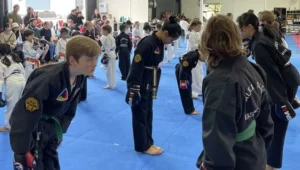
<p>The bow at the beginning and end of class reflects this mindset. It gives students a moment to acknowledge the people around them and the work they are about to do. It reinforces the idea that karate is a shared practice built on mutual consideration.</p>
<p>For children, this can support stronger social habits. For teens, it can reinforce maturity and accountability. For adults, it can provide a useful reminder that leadership often begins with how we treat the people around us.</p>
<h2>How Martial Arts Can Build Leadership Skills</h2>
<p>Leadership develops through responsibility, consistency, communication, and example. Karate gives students opportunities to practice these qualities over time.</p>
<p>As students grow, they often become more aware of how their actions affect others. They may help demonstrate a movement, encourage a newer student, or model respectful behavior during class. These small moments build confidence and responsibility.</p>
<p>Children can learn that leadership does not require being the loudest person in the room. It can mean listening well, showing patience, staying focused, and helping others feel included. Teens can develop a stronger sense of accountability. Adults can continue refining how they lead in work, family, and community settings.</p>
<p>Karate also teaches that leadership includes humility. Advanced students remain students. They continue working on timing, balance, movement, focus, and mindset. They understand that growth never fully ends.</p>
<h2>Why Martial Arts Can Support Children at Different Stages</h2>
<p>Children come to karate with different personalities, strengths, and needs. Some are full of energy. Some are quiet and cautious. Some enjoy physical challenges immediately. Others need time to become comfortable in a group setting.</p>
<p>Karate can support children at many stages because progress is personal. One child may gain confidence through movement. Another may become more comfortable following directions. Another may develop stronger balance, better listening, or greater patience.</p>
<p>Young children often benefit from activities that build coordination, body awareness, and routine. School-age children can develop focus, discipline, and confidence. Teens can benefit from stress relief, physical training, self-defense awareness, and a supportive community outside school.</p>
<p>Every student deserves to feel seen for their effort. We work to create an environment where children can challenge themselves while still feeling supported.</p>
<h2>Why Adults Continue to Benefit From Karate</h2>
<p>Adults often come to karate for fitness, self-defense, stress management, or the chance to learn something new. Many stay because training gives them a consistent practice that supports both physical and mental well-being.</p>
<p>Karate asks adults to step away from their usual routines and focus on something different. They need to pay attention to posture, movement, coordination, timing, breathing, and balance. This can be especially valuable for people who spend much of their workday sitting, multitasking, or responding to constant digital communication.</p>
<p>Adults also benefit from being beginners again. Learning a new skill can be humbling and rewarding. It can remind people that progress is still available through patience, effort, and openness to feedback.</p>
<p>For some adults, karate becomes a way to maintain mobility and coordination. For others, it becomes a way to challenge themselves mentally. For many, it becomes a reliable part of the week that helps them feel stronger, calmer, and more connected.</p>
<h2>How Training Changes as Students Grow Older</h2>
<p>Martial arts can adapt to different stages of life. A young child may be focused on basic coordination, listening, and confidence. A teen may be focused on discipline, identity, self-defense awareness, and stress management. An adult may be focused on physical fitness, personal development, and community.</p>
<p>The goals may change over time, but the core practice remains valuable. Students continue working with attention, effort, respect, and self-control. They continue developing their awareness of body and mind.</p>
<p>This makes karate a practice that can stay relevant for many years. Students do not have to stop growing once they reach a certain age or belt level. Every stage brings new opportunities to refine skills and develop greater understanding.</p>
<h2>Harmony by Karate on the Upper West Side</h2>
<p>Harmony by Karate has been part of the Manhattan martial arts community since 1995. Founded by Sensei John Mirrione, our school has long served children, teens, and adults looking for a focused, respectful, community-centered place to train.</p>
<p>Our current location on West 85th Street gives Upper West Side families and Manhattan residents a convenient place to practice karate in a supportive environment. We work with students at different ages and experience levels, from people trying martial arts for the first time to students who want to continue developing their skills over the long term.</p>
<p>We believe karate can support much more than physical ability. It can help students build discipline, confidence, emotional awareness, coordination, resilience, and respect for the learning process.</p>
<p>Each student comes to class with different goals. Some want practical self-defense skills. Some want a stronger routine. Some want an activity that supports their child’s confidence and focus. Some want a meaningful way to manage stress and stay active. We meet students where they are and help them continue moving forward.</p>
<h2>What Students Carry Beyond the Dojo</h2>
<p>Karate stays with students because the lessons extend beyond class. Students carry stronger posture into school, work, and social settings. They carry breathing techniques into stressful moments. They carry discipline into long-term goals. They carry greater awareness into their daily routines.</p>
<p>Children may become more confident trying new things. Teens may become more patient with themselves during difficult periods. Adults may become more intentional about how they handle pressure, conflict, and responsibility.</p>
<p>Karate does not make life effortless. It gives students tools that can help them approach life with greater steadiness. It gives them a practice that rewards focus, effort, respect, and persistence.</p>
<p>For people searching for karate or martial arts in the Upper West Side, training can become much more than a weekly activity. It can become a long-term practice that supports growth in school, work, relationships, family life, and the wider Manhattan community.</p>
<p>If you would like to experience our approach firsthand, visit our <a href=”https://harmonybykarate.com/contact/”>Contact page</a> to pre-enroll or ask any questions. We welcome children, teens, and adults from the Upper West Side and throughout Manhattan.</p>